A Cultural History of Akron’s Most Iconic Traditions
A City Built on Tradition, Imagination, and a Lot of Heart
Every city has its stories — little moments, strange habits, and cherished rituals that weave themselves into the fabric of daily life. But in Akron, tradition feels different. It feels louder, brighter, more hands-on. Maybe it’s because this is a place where people have always built things: tires, machines, neighborhoods, families, dreams. And when a community is built by makers, its traditions tend to be things you can see, touch, ride, cheer for, or watch float across the sky on a summer afternoon.
Walk through Akron long enough, and you’ll start to feel the echoes of kids racing handmade cars down Derby Downs, the rumble of crowds in the old Rubber Bowl, the sudden magic of the Goodyear Blimp drifting overhead like a silver guardian, the glow of the Civic Theatre ceiling sparkling like a midnight sky. These aren’t just events or attractions. They’re traditions that held Akron together through booms, busts, reinvention, and renewal.
This is the story of those traditions, and why they still matter today.
Racing Into History: The All-American Soap Box Derby
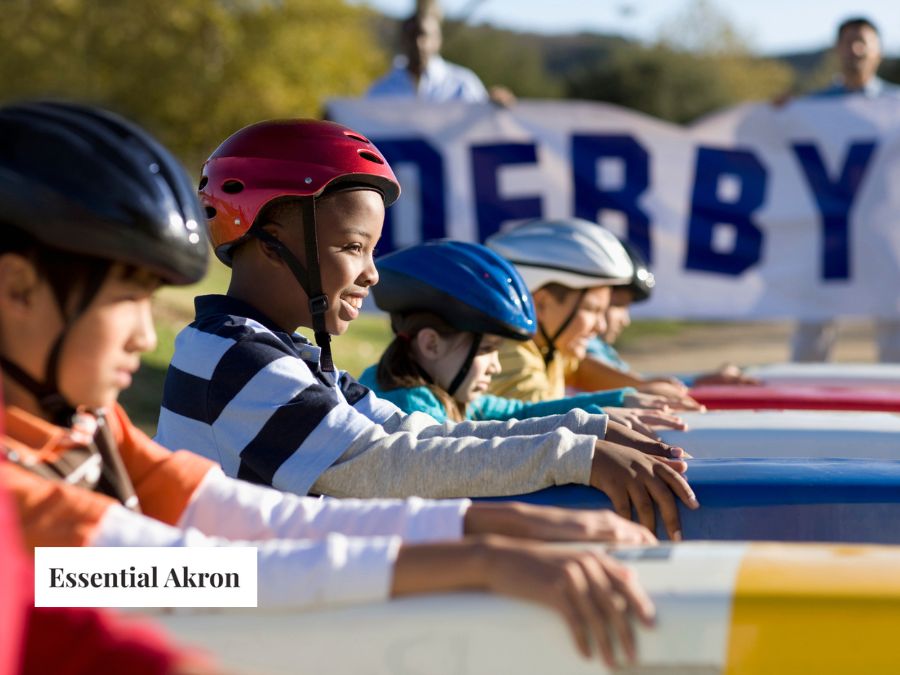
If there’s one tradition that belongs to Akron as much as rubber and resilience, it’s the All-American Soap Box Derby. What began in the 1930s as a simple pastime, kids building gravity-powered cars from scrap wood and parts, turned into a full-blown national sensation. By 1935, Akron became the official home of the Derby thanks to its rolling hills, central location, and its reputation as a city that understood the power of craft.
Derby Downs soon became hallowed ground. Each summer, families from across the country traveled here with cars strapped to the tops of station wagons. Kids spent months designing, sanding, painting, and dreaming. Race day felt like a carnival wrapped in nerves and joy, the cheers, the heat rising from the track, the moment a racer tucked their head down and pushed off into a world of pure speed and possibility.
To grow up in Akron was to know someone who raced, someone who volunteered, or someone who still had their old car tucked in a garage like a time capsule. The Derby wasn’t just a competition, it was a lesson in craftsmanship, community, and confidence. And even today, the tradition remains a symbol of Akron’s belief in young creators and the beauty of building something with your own two hands.
The Goodyear Blimp: Akron’s Floating Celebrity
Ask anyone from Akron if they remember the first time they saw the Goodyear Blimp, and you’ll probably get a smile — maybe even a story. For decades, the blimp wasn’t just an airship. It was a piece of poetry suspended above the valley, drifting past backyard cookouts, high school stadiums, and quiet neighborhoods as though checking in on everyone below.
The blimp was born from Akron’s deep roots in airship manufacturing. During the early 20th century, Goodyear didn’t just make tires, it built aircraft. The Airdock on the east side of town, a massive curved structure that still stands like a metal horizon, became one of the largest buildings in the world without internal supports. From inside that cavernous space came airships, technologies, and eventually the iconic blimps that defined an era.
To Akronites, the blimp is more than a corporate symbol. It’s the city’s unofficial mascot — a floating reminder of ingenuity, pride, and the thrill of seeing something impossibly large and impossibly graceful glide above your house at dusk. Kids waved. Dogs barked. Adults paused mid-conversation to watch it go by. Some traditions don’t need a reason. They just become part of home.
Where Akron Gathered: The Places That Became Traditions
Not all traditions have clear beginnings. Some grow naturally, shaped by the rhythm of a city and the people who live there. Akron has always had places that felt like community living rooms where crowds gathered, stories were shared, and moments became memories.
The Rubber Bowl
Built in the 1940s, the Rubber Bowl was more than a stadium. It was where high school football became near-religion, where bands played loud enough to shake the seats, where the city came alive under floodlights. From Elvis concerts to Zips games, the Rubber Bowl was a place where Akron cheered, cried, and celebrated together.
The Civi Theatre
Step inside the Civic and you’re transported — twinkling starlit ceiling, Mediterranean-style architecture, velvet seats. For generations, Akron families dressed up for performances, school plays, concerts, and movie nights. The Civic wasn’t just a theatre. It was a tradition of wonder.
Lock 3 and Downtown Festivals
As Akron evolved, its traditions did too. For decades, outdoor concerts, Fourth of July fireworks, ice skating, and holiday markets at Lock 3 became ways the city gathered in the heart of downtown. Even as the industrial era shifted, the desire to celebrate together never changed.
These spaces weren’t merely venues — they were chapters of Akron’s shared story.
Traditions Carried in Everyday Life
Some traditions don’t have official dates or locations. They live in the little things:
• The Friday-night hum of rivalry football games
• Church bake sales with recipes older than the pastor
• The smell of popcorn drifting out of Highland Square movie houses
• Summer evenings at the local fairgrounds
• Neighborhood parades where every kid gets a turn to wave
These small rituals matter because they anchor us — especially in a city that has seen so much change. Akron’s traditions don’t just belong to the past. They breathe through its people, constantly reshaped but never forgotten.
Why These Traditions Endure
What makes a tradition iconic isn’t its scale or its fame. It’s the way it makes a place feel like itself. Akron’s traditions endure because they reflect who Akronites are:
- Inventive: Building cars from scraps, airships from dreams.
- Community-minded: Gathering in stadiums, theaters, and hillsides to share experiences.
- Resilient: Holding on to joy, even in times of reinvention
- Proud: Not of perfection, but of identity — of a city that always finds a way forward.
These traditions keep Akron grounded in its history while offering hope for the future. Every race at Derby Downs, every blimp sighting, every Civic standing ovation carries the same message: “This is who we are. This is home.“
The Story of Akron Is Written in Its Traditions
Cities change — skylines shift, industries rise and fall, new generations take the lead. But traditions remind us of where we’ve been and who we’ve become. They’re the threads that hold a community together, weaving yesterday into today and today into tomorrow.
Akron’s most iconic traditions aren’t just events or symbols. They’re reflections of a city that built things with its hands, loved fiercely, gathered often, and took pride in the joy it created.
And as long as the blimp still drifts overhead, as long as kids send handmade racers down Derby Downs, as long as Akronites find reasons to come together, the heart of this city will continue to beat with the same warmth and spirit it always has.